SECTION 01.2 · CREW OPERATING NOTES
Dear Passengers Crew Roles: How to Split Your Co-op Crew
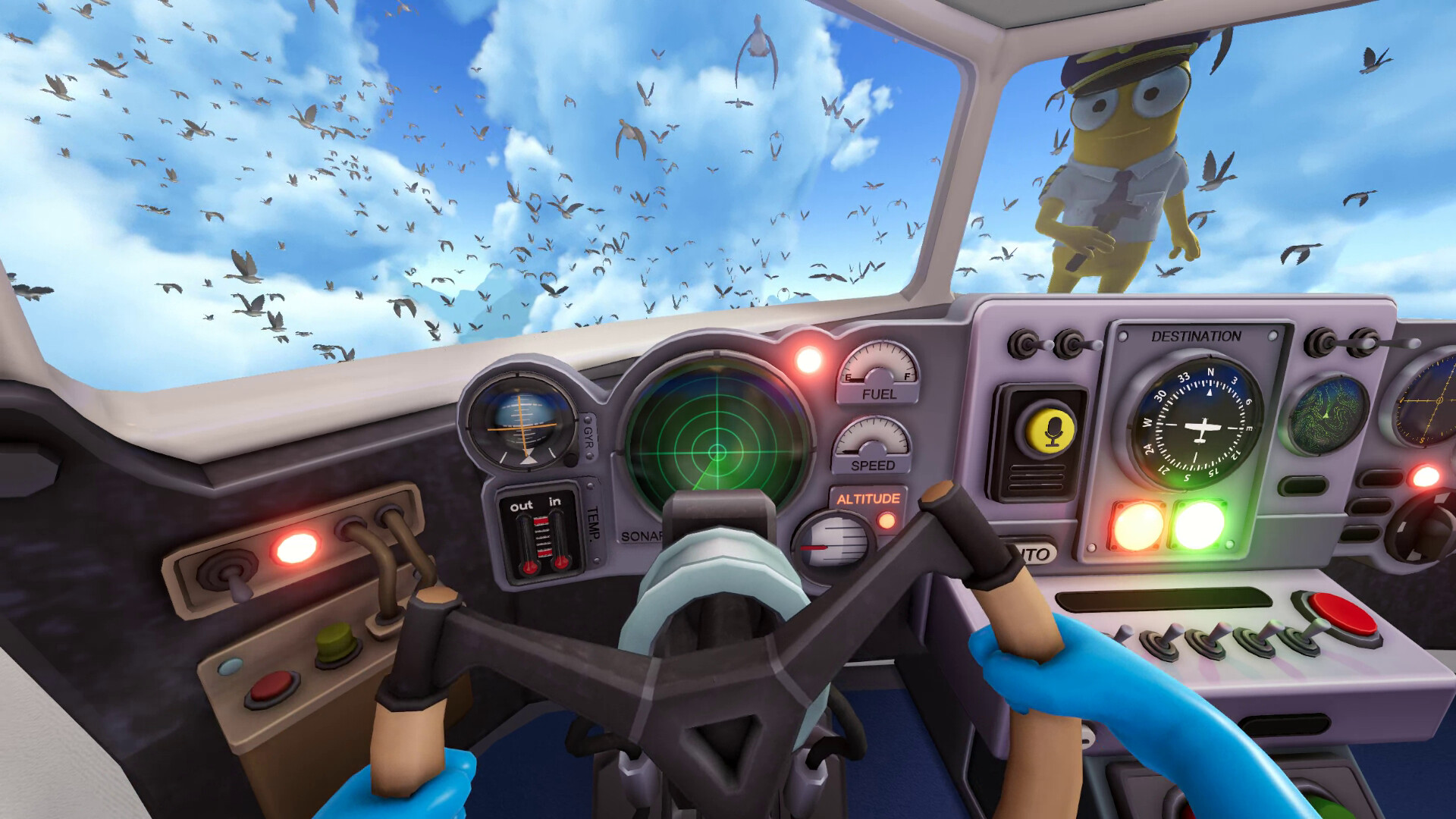
Dear Passengers crew roles are not classes. FLEXUS says there is no class system planned: players divide themselves between flying the aircraft and holding the cabin together. The current lobby maximum is four, two-player sessions are explicitly supported, and this page turns that flexible split into practical assignments.
- CONFIRMED SPLIT
- COCKPIT / CABIN
- CLASS SYSTEM
- NOT PLANNED
- CURRENT MAX
- 4 PLAYERS
- SOLO PLAY
- CONFIRMED
01 · THE ONLY CONFIRMED DIVISION
What Dear Passengers crew roles are officially
Officially, the work divides in two: someone flies the plane and everyone else works inside it. FLEXUS says it is not planning fixed classes, so pilot, cabin lead and manifest lead are team assignments rather than character types. The studio now confirms a current four-player maximum and says it is trying to support larger lobbies, without promising them for release.
The cap question now has a direct answer. In the 2 October developer Q&A, FLEXUS said four players is the current maximum and that the game is designed to be enjoyable with either two or four. Friends will be able to join through an invite or lobby code; public matchmaking is being considered but is not confirmed for release. See how that affects the Dear Passengers gameplay guide.
- Pilot / cabin split
- CONFIRMED
- Single-player supported
- CONFIRMED
- Online co-op supported
- CONFIRMED
- Named classes or job system
- NOT PLANNED
- Current maximum crew size
- 4 PLAYERS
- Friend invite / lobby code
- CONFIRMED
- Public matchmaking
- CONSIDERED
- Solo role switching
- NOT EXPLAINED
Source: Dear Passengers Steam listing and FLEXUS developer Q&A. Checked October 10, 2026.
02 · THREE PRACTICAL SEATS
The three Dear Passengers crew roles worth assigning
Suggested assignments derived from the confirmed systems. They are conventions your group agrees on, not roles the game hands out.
A · The pilot — call the bumps early
Flying is the primary job and it should stay with one person for the whole flight. The pilot's real contribution is not smoothness, it is warning: three seconds of notice before a turn, a descent or bad weather is what lets the cabin stow a case instead of catching it. Because the cockpit and cabin depend on each other, a silent pilot converts every manoeuvre into cleanup work for someone else.
B · The cabin lead — triage, then serve
Someone has to decide what gets fixed first, say it out loud, and finish it. The failure mode here is obvious once you have seen the footage: three people all chasing whatever is loudest, while the thing generating new problems keeps generating them. Service matters, but a moving cart or an unbelted passenger outranks a delayed drink every time.
C · The manifest lead — price the trouble
The pre-flight manifest is the crew's difficulty setting, so one person should own it and be allowed to say no. Mix high-risk cargo with manageable passengers until the group knows the aircraft. Dear Passengers links payout to trouble openly — which means the manifest lead is effectively choosing what kind of flight everyone is about to have.
03 · BY CREW SIZE
How to split Dear Passengers crew roles in a small group
FLEXUS currently supports up to four players and says two-player sessions are equally viable. Plan for the people actually in your lobby — and for one of them leaving.
- 01CONFIRMED MODE
Solo
Single-player is confirmed; how it works is not. Assume you will be moving between the cockpit and the cabin, so favour the most conservative manifest available and treat every stowed object as time bought back later.
- 02PILOT + CABIN
Two players
One pilot, one cabin. The cabin player also owns the manifest, since the pilot will be busy from pushback onward. This is the cleanest split and the easiest to communicate in.
- 03RECOMMENDED SHAPE
Three players
One pilot, one cabin lead, one floater. The floater does not get their own agenda — they do whatever the cabin lead names, which is exactly what stops the three-people-one-problem failure.
- 04CURRENT MAXIMUM
Four players
The current maximum. Split the cabin fore and aft with one lead each and keep a single pilot. More hands only help if someone is still deciding priority; support for more than four is a goal, not a release promise.
Friend invites and lobby codes are confirmed. Public matchmaking is under consideration; join-in-progress, local co-op, split screen and crossplay remain unannounced. FLEXUS also plans extra communication methods beyond proximity chat but has not detailed them. The Dear Passengers Steam page breakdown lists exactly which multiplayer categories the store does and does not tick.
04 · CREW QUESTIONS
Dear Passengers crew roles FAQ
Checked against the Steam listing and official developer Q&A on October 10, 2026. Suggested assignments are labelled as suggestions throughout.
How many players can play Dear Passengers together?
Four players is the current maximum. FLEXUS is trying to support larger lobbies but cannot promise that for release. The studio says sessions are designed to work well with two players as well as four.
Are there fixed classes in Dear Passengers?
FLEXUS says it is not planning a class system. The confirmed division is flying versus working the cabin. The three roles described above are a convention this guide recommends, and the gameplay guide explains which mechanics make them useful.
Can one player do everything?
Single-player is on the Steam feature list, so yes in the sense that the mode exists. What has not been explained is how one person covers several jobs — quick role switching, AI assistance and reduced task load are all possibilities and none are confirmed.
Is there voice chat for coordinating crew roles?
Nothing has been announced. Given how much of the game depends on warning the cabin before a manoeuvre, plan on using your own voice software. Steam also does not currently list Remote Play Together — see the Dear Passengers Steam page.
Does the pilot have the easiest job?
Different, not easier. The pilot has fewer simultaneous tasks but owns the timing that everyone else depends on, and cannot always perform the manoeuvre the cabin is asking for. The information gap between cockpit and cabin is the point.